Ultimate Social Media Photography Strategy 2026
Technical guide: lighting, composition, editing + Instagram, TikTok, LinkedIn and Pinterest strategies. Drive business goals with 2026 photography.

The landscape of social media in 2026 is competitive, noisy, and constantly shifting. If you are using photography to drive business goals, your strategy must be intentional.
The days of simply posting beautiful images and hoping for the best are over. Systematic changes in platform rules and modifications in how customers interact have made passive posting obsolete.
Today, success depends on understanding proprietary algorithms, knowing your audience insights deeply, and mastering the art of short-form vertical video (brief upright-oriented moving imagery).
This definitive guide provides the framework for building a powerful Social Media Strategy designed for maximum impact in 2026. We will cover technical requirements, platform trends, content planning, and the essential steps for building a strategy that delivers conversions and increases awareness.
The Foundational Shift: Why 2026 Demands a New Social Media Strategy
Before diving into lighting and composition, you must recognize the fundamental shifts driving content consumption. The old metrics and methods no longer apply. We are seeing major platform trends that require immediate adaptation.
The Dominance of Short-Form Vertical Video
The single biggest factor shaping social media in 2026 is the dominance of short-form vertical video (brief upright-oriented moving imagery). Platforms like TikTok, Instagram Reels, and YouTube Shorts now prioritize this format, massively increasing reach and engagement for native vertical videos.
If you are using photography to drive business goals, you must integrate video. Algorithms across every major platform reward creativity, authenticity, and strong hooks. You need to engage the audience quickly; the first two seconds are critical for success.
Navigating AI Personalization and Relevance
AI personalization shapes user experiences deeply in 2026. Algorithms tailor content using artificial intelligence to individual preferences, making relevance far more important than sheer posting schedule or frequency.
This demands that brands focus on quality and relevance. Tailoring content using artificial intelligence means that if your content is not immediately relevant to a user’s content consumption habits, it simply will not be shown. You must focus intensely on quality and deep audience insights.
Phase I: Building a Strategy, Purpose, and Audience Insights
A successful photography strategy starts long before the shutter clicks. You must define your purpose and set measurable business goals. This is the bedrock of your Social Media Strategy.
Defining Your Purpose and Clear Business Goals
Why are you posting? Every piece of content should align with a specific objective. Are you trying to increase awareness, drive sales, or focus on community building? Specific business goals ensure strategic effectiveness.
Your goals should be quantifiable. Instead of aiming for “more followers,” aim for “a 15% increase in conversions driven by Instagram traffic” or “a 20% growth in email sign-ups from Pinterest.” This foundation is essential for effective content planning.
Know Your Audience Deeply
Effective strategies depend entirely on analyzing content consumption habits and platform preferences. You must know your audience deeply: their problems, their triggers, and where they spend their time (is it LinkedIn, Facebook, or Threads?).
Use tools for monitoring platform conversations and leverage analytics to gain a deep understanding of user data. Creating authentic content that genuinely resonates is impossible without these critical audience insights.
Expert Insight
“AI is not just about automation; it’s about strategic optimization, enabling marketers to move beyond vague targets and measure quantifiable goals based on actionable audience data.” ( Strategic Marketing Analyst)
The 2026 Social Media Landscape: Three Core Shifts
To succeed with your social media strategy in 2026, you must adapt quickly to the systematic change in platform rules and the modification in how customers interact with content. Passive posting is obsolete.
Success requires mastering three dominant platform trends that dictate reach and content consumption.
1. Short-Form Vertical Video Dominance
Short-form video remains the undisputed king of visibility. Platforms like TikTok, Instagram Reels, and YouTube Shorts now dominate content consumption and engagement.
Algorithms highly reward creativity, authenticity, and strong hooks that grab audience attention immediately. This is the foundation of a modern social media strategy.
Native vertical video content substantially increases your reach and engagement. You must prioritize creating short-form vertical video (brief upright-oriented moving imagery) that tells a brand story quickly and authentically.
2. AI Personalization and Content Relevance
AI personalization shapes every user experience in 2026. Algorithms are now tailoring content using artificial intelligence to individual preferences more precisely than ever before.
This means quality and relevance are far more important than posting frequency. Irrelevant content will simply not be shown to your target audience.
Focus on deep audience insights. Create authentic content that speaks directly to your ideal client’s needs and interests. This focus on hyper-relevance drives higher conversions and strengthens brand storytelling.
3. The Rise of Social Search
A major trend is users increasingly using social platforms to find information, effectively turning Instagram, TikTok, and YouTube into powerful search engines, often bypassing Google for quick answers.
This critical shift makes social search and discoverability optimization paramount for social media in 2026.
To ensure your content is found when users search for specific services or inspiration, you must strategically incorporate keywords, captions, on-screen text (written words visible within video frames), and relevant hashtags. These are the specific terms used for content discoverability.
Expert Insight
“Search and social will continue bleeding into each other, emphasizing the role of social credibility, creator content, and platform-native storytelling, because that’s what AI systems trust and surface.” ( Rachel Brandt, CEO at Corner Table Creative)
Defining Your Purpose and Audience: The Strategic Foundation
A high-impact Social Media Strategy for social media in 2026 starts with defining your purpose. Passive posting is obsolete; you must be intentional.
You cannot measure success or optimize your photography output if you do not know what specific business goals you are aiming for.
Establish Strategic Business Goals
Start by establishing specific, measurable objectives. Are you using photography to increase awareness, drive website traffic, secure client bookings, or foster community building?
Every photograph, short-form video, and caption you deploy must align directly with these larger objectives. This is essential for building a strategy that performs.
For example, if your goal is achieving high conversions, your visual content needs strong integration with clear calls to action that lead directly to sales or sign-ups.
Deep Audience Insights and Behavior Analysis
You must know your audience intimately. Effective Social Media Strategy depends on analyzing their specific content consumption habits and platform preferences.
Where do they spend their time? Are they searching on TikTok, browsing visually on Instagram, or engaging professionally on LinkedIn?
Utilize platform analytics and software for monitoring platform conversations (social listening tools) to gain a deep understanding of user data.
This analysis dictates your content planning, helps identify their pain points, and informs which platform trends you should prioritize. If your audience is consuming vertical video primarily on YouTube Shorts, your strategy must reflect that systematic change in platform rules.
Authenticity Over Perfection: Brand Storytelling
The polished, overly filtered aesthetic that dominated platforms like Instagram in the past is rapidly losing traction. Users in social media in 2026 crave genuine connections.
Authentic content consistently outperforms curated perfection. Algorithms are favoring humanized visuals, like behind-the-scenes glimpses and real, imperfect moments, which increase reach and engagement.
Focus heavily on brand storytelling. Share the process, the struggles, and the triumphs of your business through photography and video. This approach builds deeper engagement and fosters true community building.
Remember, your focus should be on interaction level and user loyalty, not non-essential measurements like follower count. Your photography must feel real to resonate.
Expert Insight
“As audiences become overwhelmed by automated content, attention will shift toward content that feels real and intentional. Originality and personality will matter more than ever.” ( Manu Orssaud, CMO of Duolingo)
Building a Strategic Photography Framework
Effective content planning in social media in 2026 requires structure. You need a systematic approach that ensures consistency, variety, and strategic placement across all your channels.
This framework is how you translate your overarching business goals into daily output, preventing content burnout and ensuring every image contributes to your success.
Strategic Platform Selection
Do not attempt to spread yourself thin across every network. Focus your efforts sharply on 2 to 3 platforms where your target audience spends most of their time and where your specific social media strategy can thrive.
Your choice must be guided by deep audience insights and your primary objectives, whether those are increase awareness, drive sales, or improve conversions.
Instagram remains vital for visual portfolio showcasing, quick visual stories, and high-quality static imagery.
TikTok is essential for organic reach, trend participation, and mastering the art of the hook through short-form video.
LinkedIn is critical if your business goals involve B2B networking, professional authority, or thought leadership.
Pinterest excels for long-tail search and traffic generation, especially if your brand relies on inspirational or evergreen educational content.
Creating and Utilizing Content Pillars
Content pillars provide thematic structure and necessary variety to your posting schedule. They ensure you maintain a cohesive brand storytelling approach while catering to different audience needs.
Develop 3 to 5 core thematic categories for posting that reflect your brand identity and align with your purpose. This structure prevents content burnout and ensures you deliver a balanced mix of value.
Educational: Photography tips, gear reviews, process breakdowns, or tutorials. This helps with community building.
Inspirational: Final portfolio images, artistic concepts, or mood boards designed to showcase your mastery.
Behind-the-Scenes: Authentic looks at your workflow, client interactions, or personal life. This is crucial for authentic content.
Community: Highlighting clients, running Q&A sessions, or featuring user-generated content.
Promotional: Clear calls to action for bookings, product sales, or newsletter sign-ups designed to drive conversions.
Prioritizing Vertical Video: The 2026 Engagement Engine
In 2026, the impact of short-form video cannot be overstated. Platforms like TikTok, Instagram Reels, and YouTube Shorts dominate content consumption, and their algorithms heavily reward native, vertical video content.
To maximize reach, you must embrace vertical video (brief upright-oriented moving imagery). Algorithms prioritize creativity, authenticity, and strong hooks in the first 1.5 seconds. If you are not creating vertical video, you are missing the primary driver of organic engagement today.
Mastering Social Search and Discoverability
A significant platform trend in 2026 is that users are increasingly turning to platforms like Instagram and TikTok as search engines, bypassing Google entirely for certain queries. This shift makes optimizing for social search essential.
You must optimize your content for discoverability. This means incorporating relevant specific terms used for content discoverability into your captions, on-screen text, and, crucially, using Alt Text (alternative descriptive text for visuals) effectively.
Leveraging AI Personalization for Relevance
The rise of AI personalization means algorithms are now highly sophisticated in tailoring content using artificial intelligence to individual user preferences. Relevance now dramatically outweighs mere posting frequency.
To succeed, your content planning must be laser focused on quality and relevance based on deep audience insights. If your photography does not immediately resonate with the specific user segment the AI is targeting, it will not be shown. Focus on creating high-quality, targeted content rather than high volume.
This systematic change in platform rules demands that you constantly monitor data collected on platform performance and adapt your themes and style to ensure your authentic content finds the right eyes.
Technical Requirements for Visual Success in 2026
You have selected your platforms and defined your content pillars. Now, the technical execution must meet the demands of the 2026 algorithms. While authentic content is essential, technical quality cannot be ignored.
Your visuals must be optimized specifically for mobile consumption and demanding platform specifications to maximize reach and engagement.
Optimizing for the Vertical Video Economy
The dominant content consumption method in social media in 2026 is the short-form vertical video (brief upright-oriented moving imagery). Platforms like TikTok, Instagram Reels, and YouTube Shorts prioritize native vertical video (9:16 aspect ratio).
If your social media strategy involves video, and it must, this format is paramount for maximum screen takeover. Algorithms reward creativity, authenticity, and strong visual hooks within the first 1 to 3 seconds.
Technical quality here means shooting high resolution (4K is ideal) and ensuring motion is smooth and purposeful to keep the audience viewing duration high.
Lighting and Composition: The Technical Foundation
Mobile screens demand immediate clarity. Ensure your lighting is purposeful, guiding the viewer’s eye directly to the subject.
For maximum impact, composition should be clean and instantly digestible. Avoid clutter, especially when creating hooks for short-form video.
Remember that even in static images, the Rule of Thirds or leading lines must draw the audience into the brand storytelling quickly.
Editing, Consistency, and Brand Storytelling
Maintain a consistent visual identity across all channels. Your editing style, color palette, and saturation levels should be instantly recognizable.
This aesthetic uniformity aids significantly in brand storytelling and recognition, helping to increase awareness every time a user scrolls past your content.
If you have a tight budget for supporting visuals, such as background graphics or educational slides, utilize high-quality resources. Services offering Free Stock Photos, such as Dreamstime, can provide supporting visuals, but always prioritize your original, authentic content for core messaging.
Technical Optimization for Social Search
Users are increasingly utilizing platforms like Instagram and TikTok as search engines. This modification in how customers interact means your photography must be technically optimized for discoverability.
Technical optimization now extends beyond image quality to include metadata and context. Always utilize descriptive captions, relevant hashtags, and high-quality alternative descriptive text for visuals (alt text).
For short-form video, ensure you incorporate written words visible within video frames and spoken keywords, as these elements significantly boost the ease with which content can be found and improve your standing in social search results.
Platform-Specific Photography Strategies: Tailoring Your Social Media Strategy
You have mastered the technical demands of the vertical video economy. Now, success depends on tailoring your approach. The core of any effective social media strategy in social media in 2026 is understanding that each platform rewards different behaviors and content consumption patterns.
You must align your visuals with your specific business goals, whether that is increased awareness, community building, or driving sales and conversions. Strategic platform selection based on deep audience insights is paramount.
Instagram and Threads: Visual Storytelling and Social Search
Instagram remains vital for visual brand storytelling, but its focus has shifted. The algorithm heavily prioritizes Instagram Reels, making short-form video essential for reach and increasing awareness.
Use static photography in carousels for depth, education, and showcasing your content pillars. This combination leverages both the reach of vertical video and the retention provided by detailed posts.
Crucially, optimize your captions for social search. Users are increasingly leveraging Instagram as a search engine. Include specific terms used for content discoverability and relevant alternative descriptive text for visuals to ensure maximum engagement.
Threads excels at quick, conversational interaction and community building. Use it to post text updates or polls around your visuals, driving deeper audience insights and fostering genuine connection.
TikTok and YouTube Shorts: Immediate Value and Authenticity
These platforms thrive on immediate value and the rapid-fire distribution of vertical video. The first three seconds are the most important element for stopping the user scroll, especially given the impact of AI personalization that tailors feeds instantly.
Focus on high-velocity cuts, trending audio, and highly relatable, authentic content. Users overwhelmingly prefer genuine stories and behind-the-scenes moments over polished perfection.
For TikTok and YouTube Shorts, leverage the power of social search. Ensure your video titles, hashtags, and written words visible within video frames are keyword-rich. This strategy improves the ease with which content can be found, boosting overall performance and reach.
By analyzing deep audience insights, you can understand typical content consumption habits and tailor your short-form video hooks for maximum impact.
LinkedIn for Professional Authority and Conversions
If your business goals involve B2B sales, client acquisition, or high-end professional photography, LinkedIn is essential. This platform rewards professionalism and expertise.
Use strong, high-quality professional imagery paired with long-form text. Discuss industry insights, provide educational content, or share detailed client case studies that demonstrate your expertise and brand storytelling capabilities.
This approach builds thought leadership and drives higher-value conversions, aligning photography directly with financial success. Remember to define your purpose clearly: LinkedIn is for expertise, not solely for entertainment.
Pinterest for Evergreen Traffic and Google Search Optimization
Pinterest functions primarily as a powerful visual search engine and is crucial for driving long-term, evergreen traffic back to your website or portfolio. It is less about fleeting engagement and more about sustained discoverability.
Your content planning must account for high-quality, multiple vertical video Pins (2:3 or 9:16 aspect ratios) for every piece of content. Link these back directly to your blog, booking page, or product listings.
Optimize all descriptions and titles with robust keywords. This ensures your pins rank highly within both Pinterest and Google image search results, maximizing your long-term return on investment.
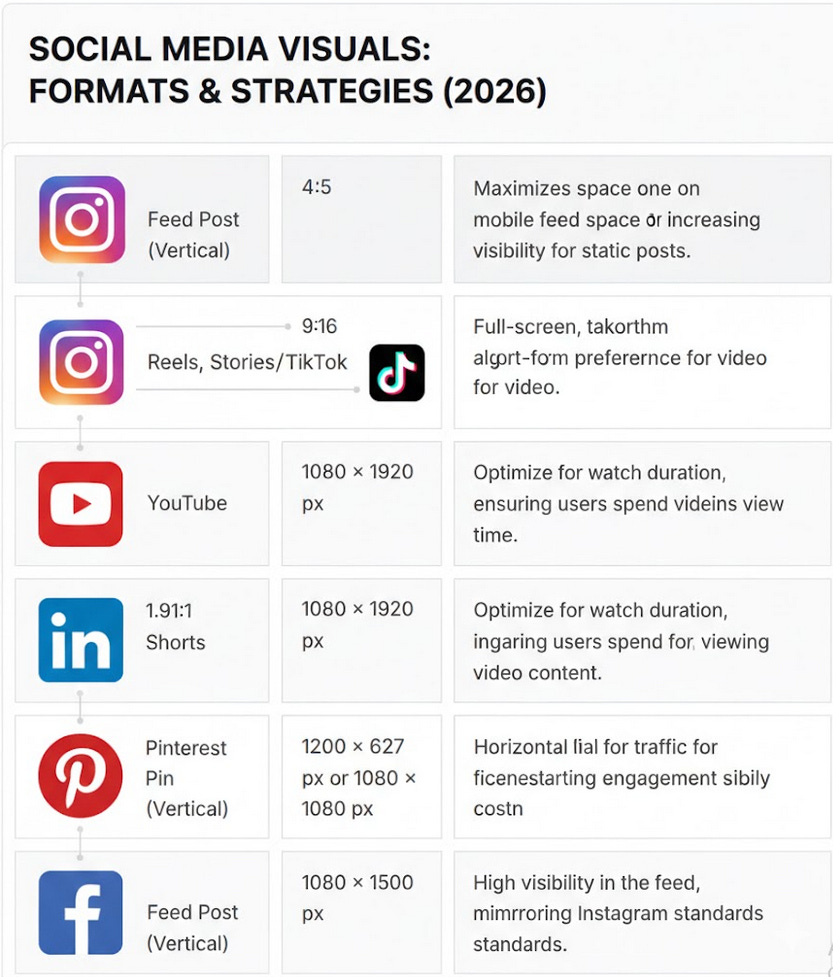
Critical Image Specifications Table 2026
Your social media strategy is dead in the water if your visuals are cropped, compressed, or fail to utilize maximum screen real estate. This technical adherence is essential for optimizing content consumption and driving immediate engagement.
To succeed in the vertical video economy, you must strictly adhere to these critical image specifications for 2026. These sizes ensure your brand narrative is delivered flawlessly across every platform.
Measuring Success and Driving Conversions
A flawless technical execution means nothing if it does not move the needle. Your entire Social media strategy hinges on one question: Are your visuals driving meaningful Conversions?
Defining Your Purpose: Aligning Content with Business Goals
Success in social media in 2026 is measured not by how many people saw your content, but by how many people took action because of it. Before you post, you must define your purpose.
Are you aiming to increase awareness, drive sales, or foster community building? Random metrics like non-essential measurements like follower count are vanity. Focus exclusively on monitoring actions that lead to business goals.
Key Performance Indicators (KPIs) for Photography
The new currency is deep engagement. You must prioritize metrics that indicate interaction level and user loyalty, not just reach or impressions.
If your goal is drive sales, track click-through rates (CTR) from Instagram posts or Pinterest links directly to product pages. For awareness, look at saves and shares; these metrics signal high relevance and value.
Measure the depth of interaction: saves, shares, comments, and direct messages. These actions signal that the user views your content as valuable enough to revisit or share with their network, which algorithms reward heavily.
Success in 2026 is measured not by how many people saw your content, but by how many people took action because of it. Engagement is the new currency.
The Continuous Feedback Loop: Utilizing Audience Insights
The core of a winning Social media strategy is the ability to adapt. You must establish a continuous feedback loop using data collected on platform performance.
Analyze which short-form video formats performed best on TikTok or Instagram Reels and why. Did the aesthetic or the topic resonate? Use this deep understanding of user data to refine your content pillars and posting schedule.
Pay attention to content consumption habits. How long are users viewing your vertical video content? This analysis provides crucial audience insights that inform the structure of your next visual hook.
This continuous optimization is the key to maintaining relevance amidst the rapid platform trends and adapting to systematic change in platform rules.
Advanced Strategy: Content Repurposing and Batching
The competitive nature of social media in 2026 demands a highly efficient social media strategy. To keep pace with the constant need for fresh content, especially short-form video, and maintain visibility, efficiency is no longer optional.
To manage the demands of constant posting across platforms like TikTok, Instagram, Facebook, and X/Twitter, you must optimize your production workflow.
Content Batching
Content batching is the cornerstone of effective content planning. This involves creating your content in bulk rather than day-to-day.
Dedicate specific days solely to shooting vertical video, another day for editing final images, and a separate session for writing captions and optimizing for social search.
This systematic approach ensures consistency in your posting schedule and drastically reduces the daily stress associated with maintaining a robust social media strategy.
Batching allows you to focus on quality and deep audience insights rather than scrambling for daily posts, which is critical for driving conversions.
Repurposing Across Platforms
A single, well-executed idea should fuel content across all your channels, maximizing the return on your creative investment.
Content consumption habits in 2026 require this strategic reuse.
For example, a long-form tutorial shot for YouTube can be segmented into ten micro-videos for YouTube Shorts, summarized into an engaging Instagram Reels, and broken down into five text posts for Threads or X/Twitter.
This systematic change in content use is vital for high-volume execution without sacrificing quality or brand storytelling.
By transforming long-form content into bite-sized vertical video formats, you ensure that your message reaches different segments of your audience where they prefer to consume content.
Frequently Asked Questions
What is the most important platform trend for photographers in 2026?
The most crucial trend dominating social media in 2026 is the rapid rise of short-form video. Specifically, the vertical video formats like TikTok, Instagram Reels, and YouTube Shorts offer the highest organic reach.
If you are building a strategy, you must prioritize these formats. Algorithms reward creativity, authentic content, and strong hooks that quickly capture and sustain audience interest.
How does AI personalization impact my content strategy?
AI personalization fundamentally reshapes content consumption. Algorithms are now intensely focused on relevance, meaning they prioritize content that genuinely matches individual user interests, often through tailoring content using artificial intelligence.
To succeed, you must first define your purpose and focus on high-quality, authentic visual brand storytelling that speaks directly to your audience insights. Generic content simply will not reach users when relevance is the gatekeeper.
Should I focus on follower count or engagement?
You should overwhelmingly prioritize engagement and community building. Non-essential measurements like follower count are largely vanity metrics that do not reflect true influence or business success.
Focus instead on saves, shares, and comments. These actions signal high relevance to the algorithm and are the strongest indicators that your content is helping you achieve your business goals and drive sales and conversions.
How often should I post my photography work?
Your optimal posting schedule depends entirely on the platform and your content planning. For high-reach, short-form video platforms like TikTok and Instagram Reels, daily posting or multiple times per week is often necessary to maintain visibility.
For static photography posts, maintain consistency, usually 3 to 5 times per week, aligning with your predefined content pillars. Know your audience and monitor their activity to pinpoint the best times to post.
What is Social Search and how do I optimize for it?
Social search refers to the trend where users are using social platforms to find information, treating platforms like Instagram, TikTok, and YouTube as search engines, much like Google.
You must optimize by including specific terms used for content discoverability in your captions, hashtags, and on-screen text (written words visible within video frames). This improves the ease with which content can be found and is critical for increasing awareness.